
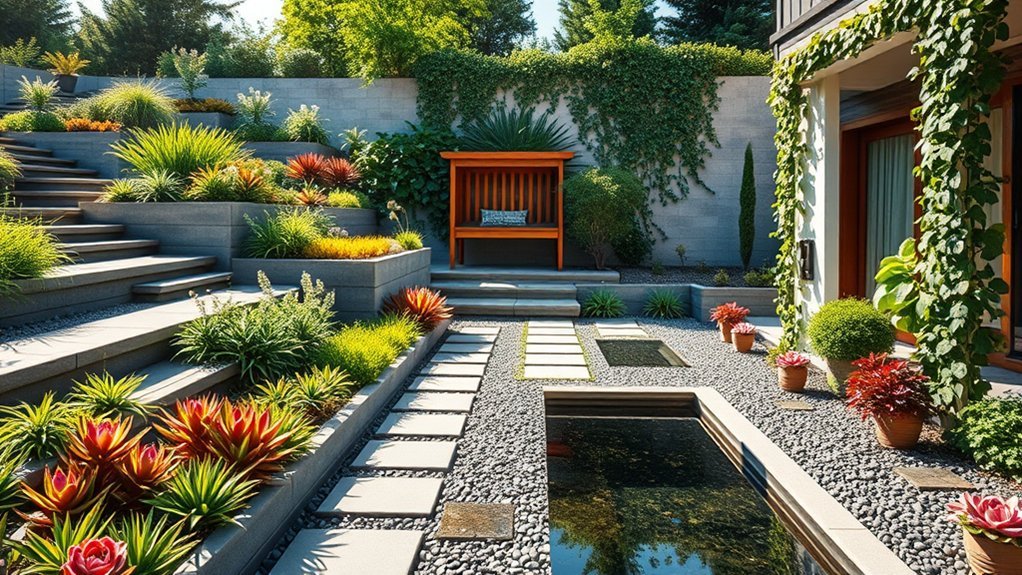
Hey, want to create a modern home garden layout? Start by measuring your space accurately, using a tape measure for precision. Develop a site overview, noting sunlight and soil quality. Design pathways, keeping them wide and curvy for easy walking. Position key features like benches near sunny spots. Balance plants and hard surfaces, aiming for a neat look. Finally, adapt the design to your needs? how do you use your yard? Stick around for extra tricks!
Key Takeaways
- Measure your garden space accurately using a tape measure for precise dimensions and layouts.
- Create a site overview with sun mapping to identify sunlight and shade areas.
- Design primary pathways at least 3 feet wide for easy navigation and aesthetic flow.
- Balance softscape and hardscape, aiming for one-third plants and two-thirds paths or structures.
- Focus on functionality by using vertical space and researching plant compatibility for diversity.
Measure Your Garden Space Accurately
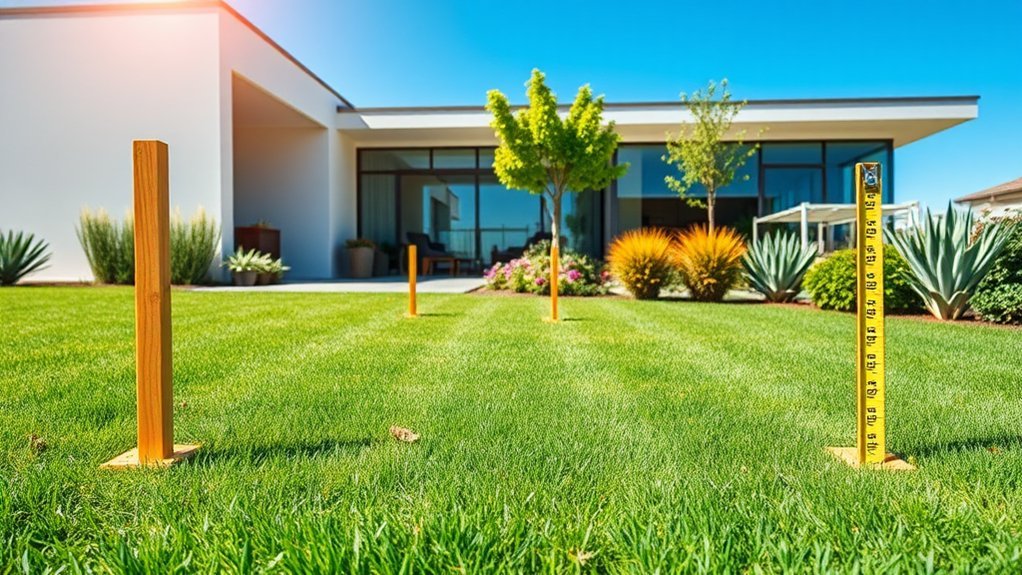
Hey there, let? s dive right into measuring your garden space with precision. Grab a tape measure, and start getting those accurate measurements of your property lines.
Include stuff like garages or sheds in your garden layout, so nothing? s missed. Jot down your home? s dimensions, noting doors, windows, and spigots, to avoid blocking access.
Wanna plan a garden that thrives? Use triangulation for tricky corners, especially curves, to nail those measurements. Think of yourself as a garden designer, sketching out ideas to design a garden that fits perfectly.
Ever tried mapping something like a puzzle? That? s your goal here. Record everything carefully, and you? re set to create a solid foundation for your dream outdoor space. How? s that sound? Let? s also consider adding vibrant flowers to elevate the beauty of your layout with colorful floral designs for a stunning visual impact.
Consider incorporating vegetable plots into your design for a fresh, homegrown harvest. A new sentence with growing delicious vegetables and the potential for a sustainable, rewarding addition to your garden.
As a beginner, explore simple garden layouts to ensure your space is both functional and visually appealing.
Develop a Comprehensive Site Overview
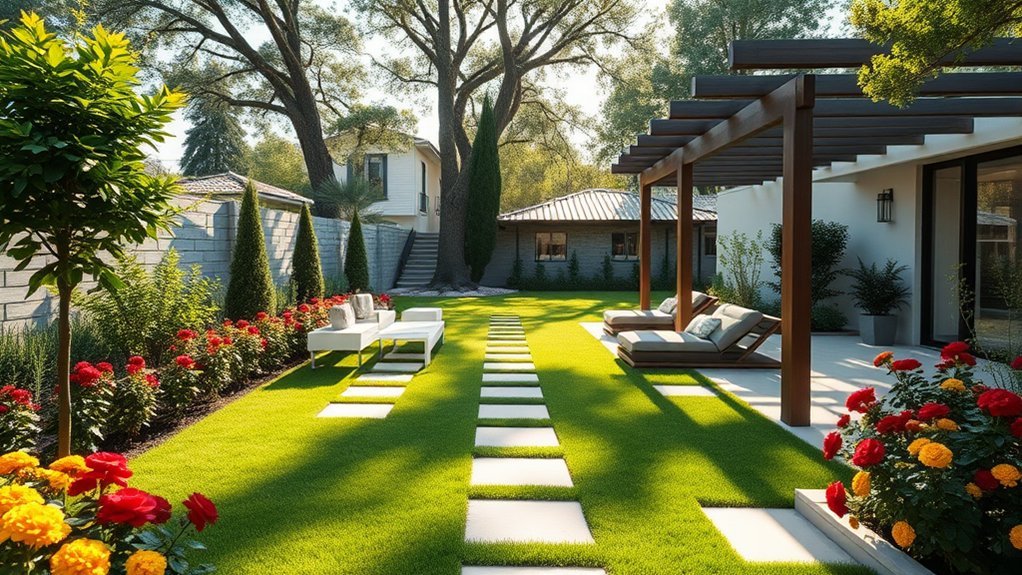
Before you start planting, let? s build a solid picture of your garden space. First, create a site inventory, noting your property? s dimensions, structures, and utilities for a smart garden layout.
Then, do a sun map analysis to see where sunlight and shade fall, guiding your plant placements. Got windows or doors? Measure distances to keep views clear. Also, assess the soil quality to ensure it supports your chosen plants with the right nutrients and drainage for a thriving garden with optimal soil conditions.
Take time for a sun map analysis to track light and shade, ensuring perfect plant spots. Measure from windows to preserve your views.
To make your garden design pop, consider these steps:
- Use triangulation to position corners accurately for a precise layout.
- Sketch areas for future pathways, ensuring easy movement in your space.
- Mark spots for plants based on sunlight needs, avoiding guesswork.
Ever tried mapping a treasure hunt? That? s your garden layout! Incorporating creative landscaping techniques can elevate your design with innovative garden ideas for a unique and stunning outdoor space.
Additionally, explore various design themes to create a tranquil environment with relaxing garden ideas that transform your outdoor space into a personal oasis.
Design Primary and Secondary Pathways
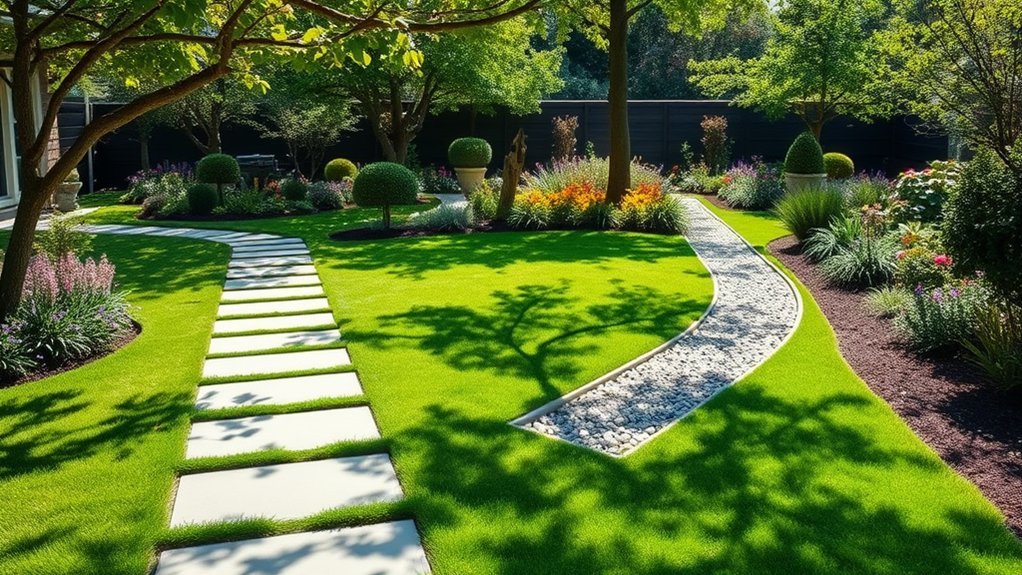
As you plunge into shaping your garden, let’s tackle the paths that’ll guide you through it.
Start with primary pathways, making them wide, at least 3 feet, so two folks can stroll together. These are the main routes in your garden plan, tying everything in your landscape design together.
Then, design secondary pathways, narrower at about 2 feet, to link spots like garden beds or cozy nooks.
Got a style in mind? Pick materials like gravel for a casual vibe or stone for something fancier.
Keep paths flowing naturally with curves, avoiding sharp turns. Doesn’t a winding path feel like a little adventure?
Make sure your design avoids dead ends, so traversing your garden’s a breeze.
Consider incorporating shade elements along paths with overhanging trees or structures to enhance comfort during sunny days.
Strategically Position Key Features and Focal Points
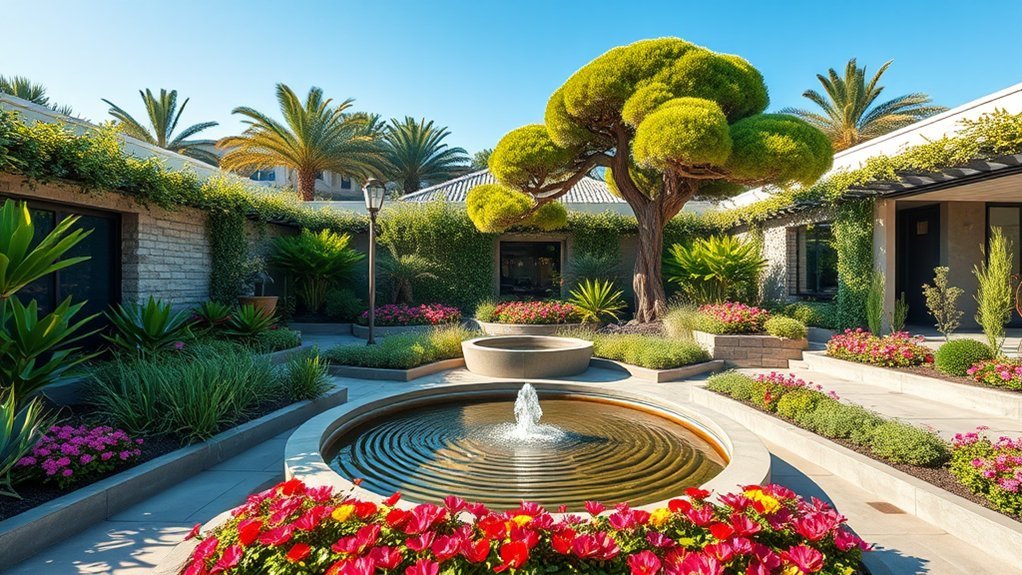
Now that you? ve got your pathways sorted, let? s figure out where to place the standout stuff in your garden. As home gardeners, you gotta prioritize what matters in your layout.
Make a wish list for your plan? think about a cozy seating spot or a vegetable garden. Where do these fit best? For inspiration, explore various shade solutions to protect your seating areas from harsh sunlight. Consider adding subtle illumination with garden lighting options to enhance the ambiance of your space after dark.
Consider these tips to nail your garden? s focal points:
- Place eye-catching stuff, like a cool sculpture, where it pulls focus naturally.
- Check sun and shade patterns, so your seating gets that sweet afternoon light.
- Match the size of features to your space, avoiding a cramped vibe.
Got a favorite tree or water feature? Position it to boost your garden? s flow and charm! Explore innovative ideas with creative garden decor to elevate your space even further.
Balance Softscape and Hardscape Elements
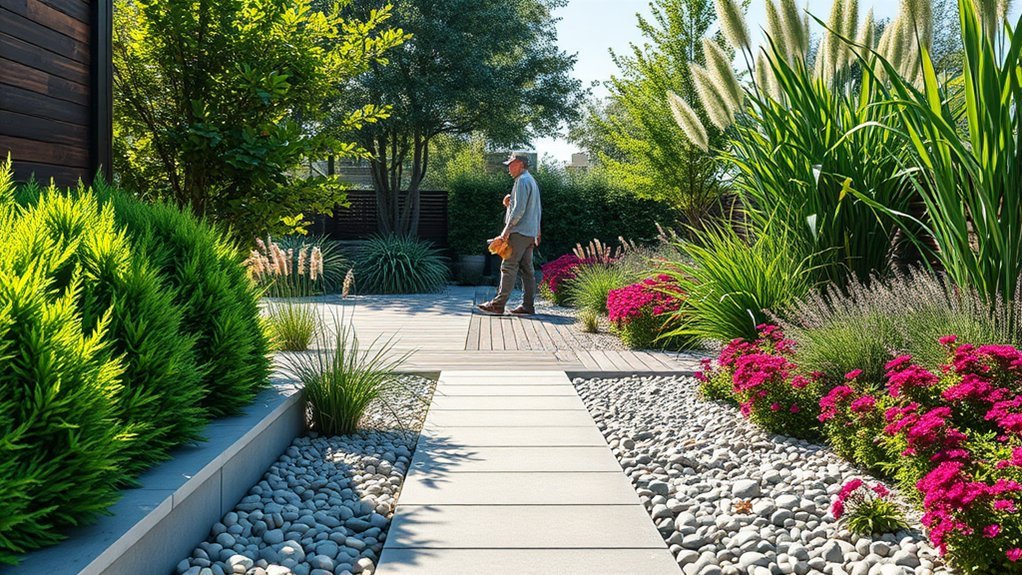
While planning your garden, let? s tackle the mix of softscape and hardscape elements. You? ve gotta balance about one-third softscape, like plants and grass, with two-thirds hardscape, such as pathways and patios, to boost visual interest.
Hardscape defines your garden layout, making spaces for chilling or walking, and if you match materials to your home? s style, it looks super neat.
Now, softscape brings life with colorful plants and flowers, adding texture to the mix. Ever thought of your garden as a painting? Softscape is the color, hardscape the frame.
Incorporate Personal and Functional Needs
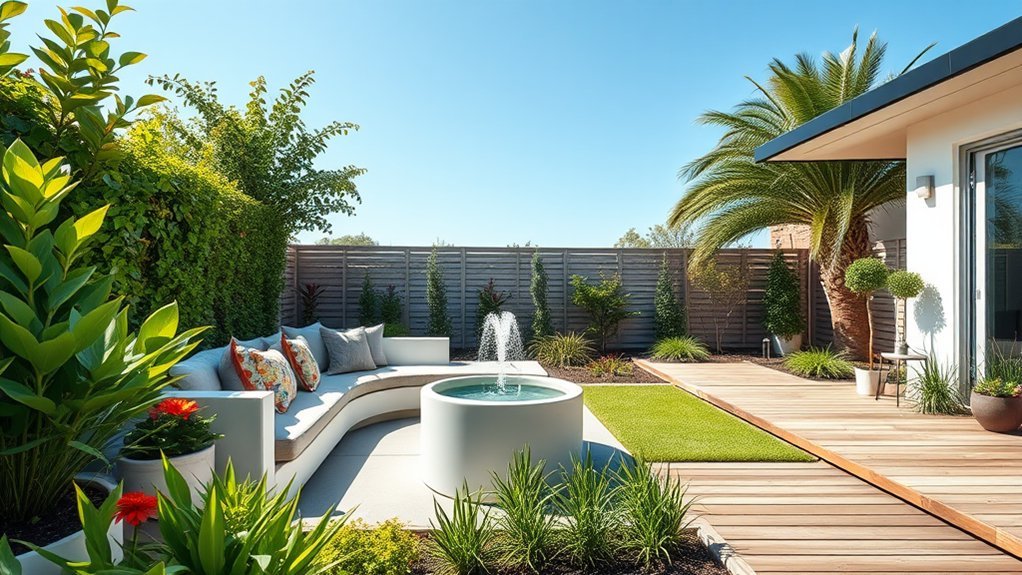
Hey there, let? s shift gears a bit from balancing plants and pathways to making your garden truly yours.
Wanna make your garden a perfect fit for you? Start by thinking about your functional needs, like spaces for relaxing or playing.
Here? s how to plan it out, even if you? re building a garden from scratch:
- Seating Area: Place a cozy seating area near your house, facing southwest for sunny vibes.
- Water Feature: Add a small water feature to boost the look and calm of your space.
- Plant Choices: Choose your plants wisely to match your style and maintenance level.
Consider storage for tools, maybe a washing line too.
How will you use this space daily? Let? s make it work for you! Think about adding a play area for kids to ensure the garden is a fun and safe environment for the whole family with interactive play elements.
Creating a welcoming space with family-friendly designs can ensure everyone enjoys the garden together.
For added seclusion, consider installing privacy screens to shield your space from prying eyes.
Refine and Adapt Your Garden Design
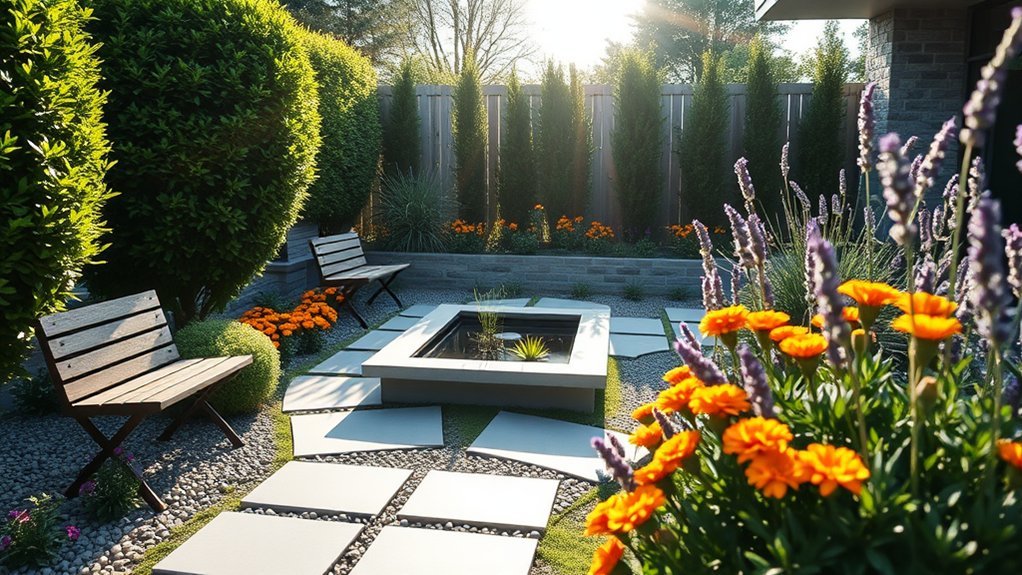
As you settle into your garden space, it? s smart to keep tweaking the design. Gardens change with seasons, and so should your plans. Make sure you revisit your layout often, adjusting for plant growth or new ideas.
Got taller plants? Place them at the back, so they don? t block smaller ones.
Think about pathways too, especially in a garden in the city, where space is tight. Are they easy to walk? If not, fix them with simple steps.
Try raised beds for an edible garden; they? re neat and handy. Check a beginners guide for tips if you? re new.
Ever rearrange a room? It? s like that? keep testing what works. What? s one change you? ll make today?
Frequently Asked Questions
What Is the Rule of 3 in Gardening?
Hey, you? ve gotta know the Rule of 3 in gardening! This rule explanation shows how plant grouping in threes creates visual balance. Mix texture variety, color harmony, and seasonal interest for stunning results.
What Is the Most Efficient Garden Layout?
Hey, wanna know the most efficient garden layout? Use raised beds for easy access, try vertical gardening to save space, and pair companion planting with crop rotation across garden zones for seasonal planting success!
Is There an App to Plan a Garden Layout?
Hey, hungry horticulturist, wanna plan your garden layout? Immerse yourself in digital gardening with garden design apps! Use layout software, virtual planning, landscaping tools, and garden visualization to craft your perfect plot with ease.
What Is the Best Way to Arrange Plants in a Garden?
Hey, when arranging plants in your garden, prioritize plant height and sun exposure. Use companion planting, focus on color contrast, guarantee seasonal blooms, and maximize space utilization for a vibrant, thriving setup!
Conclusion
Hey, you? ve got this! Crafting a modern home garden layout isn? t as tough as it seems, even if you? re worried about messing up the design. Start with these seven tips, tweak as you go, and watch your space transform. Isn? t it cool to think of your garden as a personal canvas? What? s one feature you can? t wait to add? Keep refining, and you? ll create a yard that? s totally yours.