
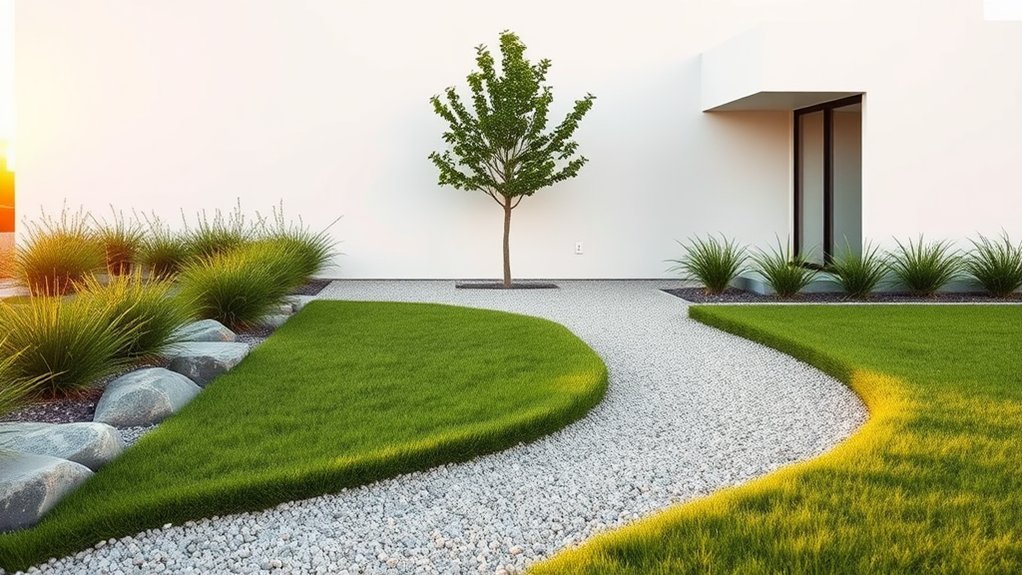
Hey, wanna spruce up your yard with minimalist flair? Start by picking just two or three colors, like calm grays or whites, to keep things cohesive. Use simple materials, think concrete or wood, and stick to neutral tones for a clean look. Repeat plants or pavers for impact, focus on practical designs, cut visual clutter, and use every corner smartly. Curious about making it perfect? Stick around for extra tips!
Key Takeaways
- Focus on simplicity with clean lines and uncluttered spaces for a minimalist garden design.
- Use a limited color palette of neutral tones and one bloom color for cohesion.
- Choose low-maintenance, native plants to simplify upkeep and enhance adaptation.
- Incorporate repetition in plants and hardscape elements to create visual unity.
- Maximize space with climbing plants on walls and small plants in corners.
Embrace a Limited Color Scheme
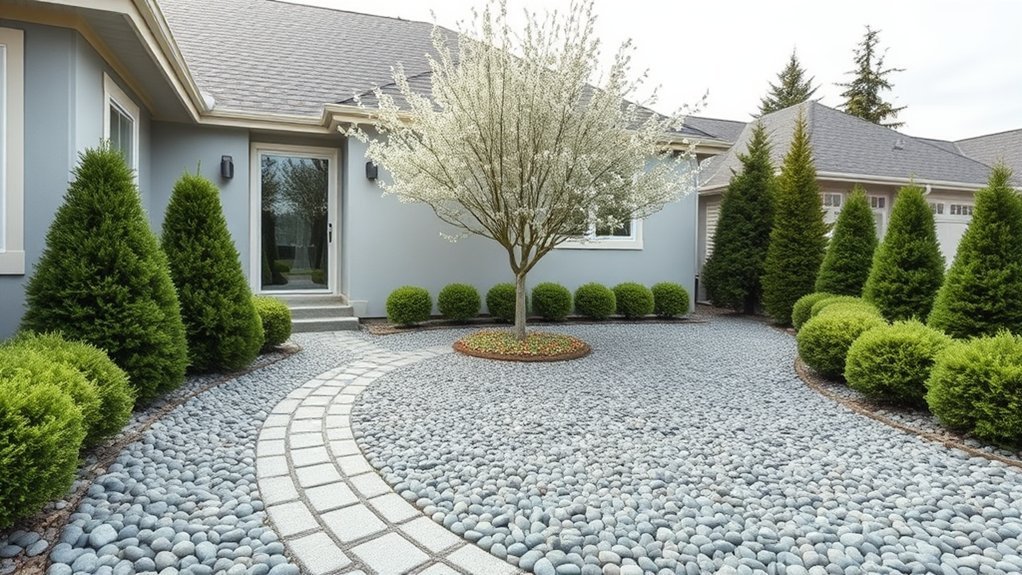
While designing your minimalist landscape, why not start with a limited color scheme? It? s a simple trick, like picking just a few crayons for a drawing. Stick to a color palette of two or three shades, and you? ll create a neat, cohesive look.
Why not simplify your minimalist landscape with a limited color scheme? Choose just two or three shades for a clean, unified look.
Use neutral tones, like grays or whites, to blend with nature, boosting that minimalist design vibe.
How about one bloom color, say soft white, for your flower beds? It keeps things consistent, adds visual interest, and lets other features pop.
Layer plants with different heights and textures in that same color palette, and you? ve got depth without chaos. Match your planters to these hues, and watch your space tie together. Easy, right?
Consider exploring various home landscaping ideas to inspire your minimalist garden design.
Simplify Material Choices
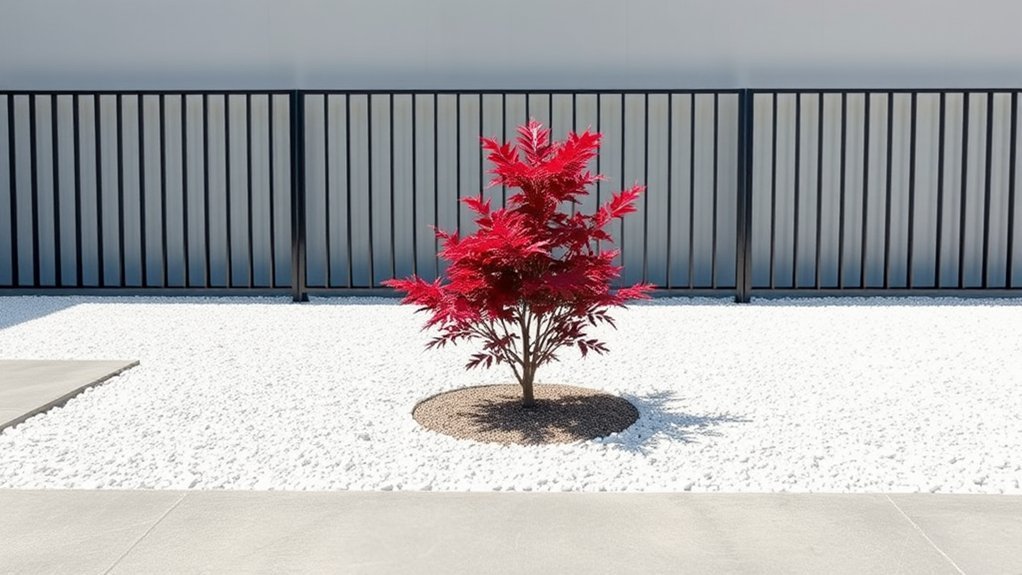
Hey, let? s plunge into simplifying your material choices for a minimalist landscape. When you? re crafting a minimalist landscape design, it? s all about keeping things clean and simple.
Stick to just three materials, like concrete, wood, or stone, so everything looks tied together. This helps simplify material choices and avoids a messy vibe.
Wondering how to balance materials and plants? Let durable options, like gravel or metal, take the backseat while your greenery shines. Opt for eco-friendly materials to ensure sustainability in your design.
Use linear patterns in paths or decking to guide the eye smoothly. Plus, pick stuff that lasts and ages well? think of it like choosing a sturdy backpack.
How will you mix your three picks? Keep it basic, and you? ll create a calm, organized outdoor space. For budget-conscious options, explore affordable landscaping solutions to maintain simplicity without breaking the bank.
For added seclusion, consider incorporating privacy landscaping ideas to enhance both aesthetics and functionality.
Prioritize Neutral Tones
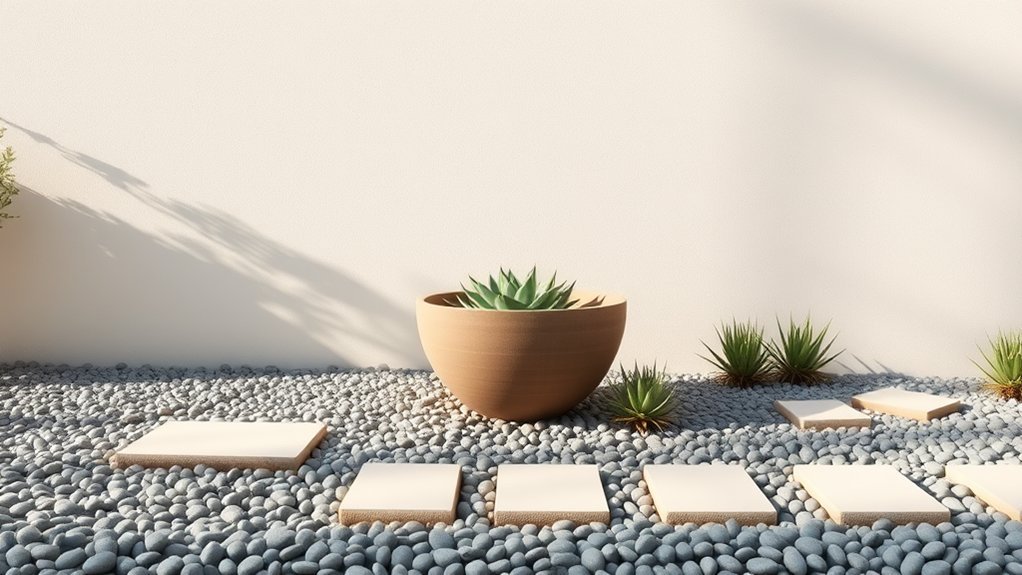
Let’s shift gears a bit and talk about prioritizing neutral tones in your minimalist landscape.
You can create a calm, cohesive space by sticking to soft, subtle colors that don? t clash. Neutral tones, like beige, gray, and white, blend with nature, following minimalist principles for a tidy look.
Wondering how to pull this off? Check these ideas:
- Use concrete or gravel for hardscape materials; they? re neutral and low-maintenance.
- Pick pathways in soft earth shades to match your greenery.
- Stick to a monotone palette for a sophisticated, tranquil vibe.
- Choose patio stones in gray or beige for a solid, harmonious base.
See how neutral tones simplify upkeep? They hide wear better than bright colors, so your yard stays sharp!
Utilize Repetition for Impact
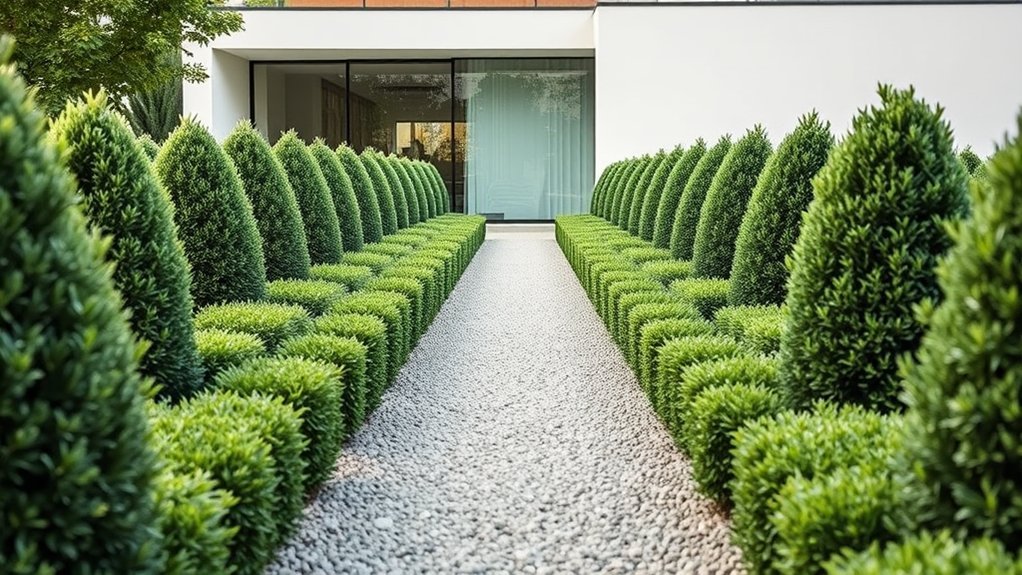
As you build your minimalist landscape, consider using repetition to make a big impact. Repetition, when done right, boosts visual interest and creates cohesion in your yard. Line pathways with matching shrubs, like boxwoods, to guide the eye neatly. Or, flood garden beds with one plant type for texture and color unity. Even hardscape stuff, like pavers, can repeat to tie areas together. It? s like wearing matching socks? simple, but it works! Curious how to start? Check this table for ideas:
| Element | Where to Repeat | Why It Works |
|---|---|---|
| Shrubs | Along paths | Directs attention |
| Flowers | In beds | Adds color unity |
| Pavers | Walkways, patios | Links spaces |
| Benches | Seating spots | Builds a consistent look |
Plus, repetition cuts maintenance hassle with similar care needs everywhere.
Focus on Practical Design

Moving from repetition’s visual tricks, now think about making your yard truly work for you. Focus on functionality, ensuring every part of your space has a purpose.
How can your garden be both useful and easy to care for? Let’s break it down with some practical ideas.
Wondering how to make your garden practical and low-effort? Dive into simple tips to transform your space with ease!
Here’s how to boost functionality with simple tweaks:
- Choose low-maintenance plants, so you’re not stuck watering or trimming all day.
- Create clear pathways, making it a breeze to walk through your yard.
- Add seating spots for chilling out, turning your garden into a hangout zone.
- Use storage benches to stash tools, keeping things tidy and handy.
With these tips, maintain your space regularly, and you’ll keep it working for you, no hassle needed.
Consider incorporating coastal landscaping ideas to bring a breezy, relaxed vibe to your minimalist design.
Transform your outdoor area with patio garden designs to create a stylish and functional extension of your home.
Minimize Visual Clutter
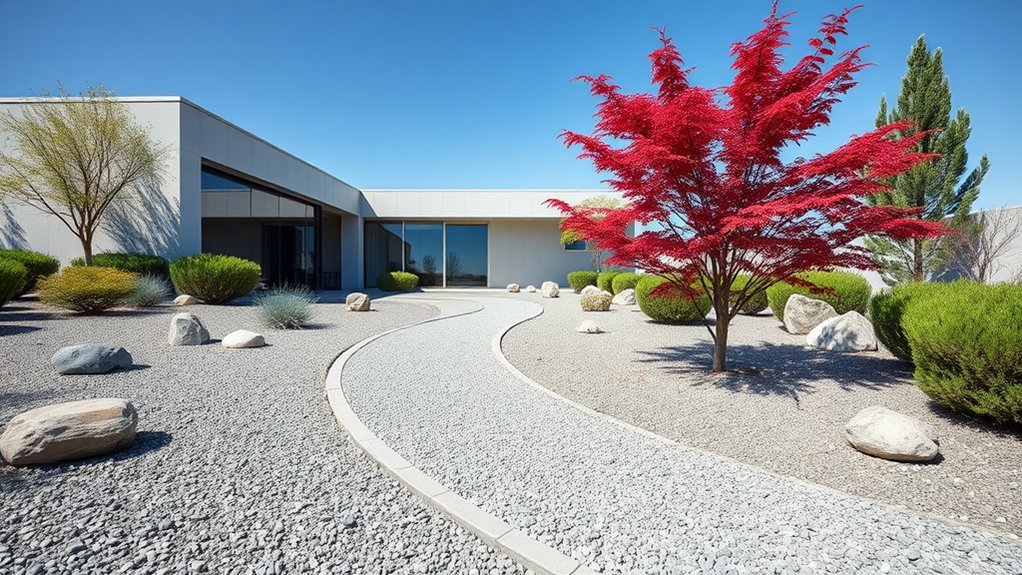
While you? re shaping your yard for function, don? t forget about keeping it looking sharp.
Visual clutter can mess up your minimalist garden, so let? s tidy it up. Start by using outdoor storage, like benches or cabinets, to hide tools and gear.
Got hoses lying around? Conceal them with decorative covers or tuck them into your design. Choose furniture with built-in storage to cut down on scattered stuff, and plant strategically to hide ugly spots.
This helps create a cohesive look that? s easy on the eyes. Do you weed and prune often? If not, start now to keep things neat.
Think of your yard like a clean desk? everything in its place makes it look better, right? Explore various DIY project plans to enhance your space with home landscaping ideas.
Inspired by linen closet organization, consider labeling storage bins for easy access to outdoor essentials. labeling storage bins
For a seasonal touch, consider rotating decorations with creative storage solutions to maintain a minimalist aesthetic year-round.
Optimize Every Garden Area
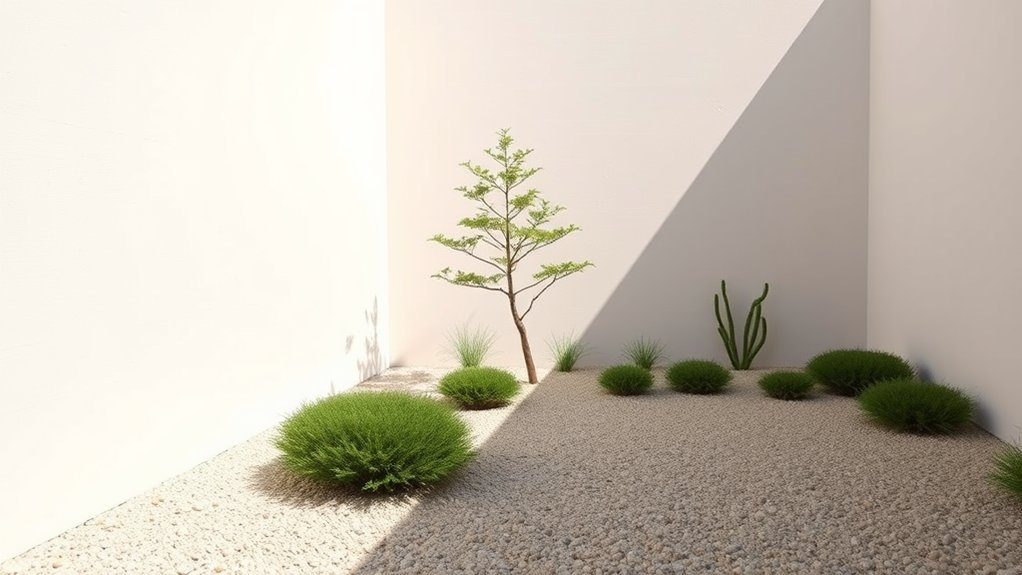
Hey there, let? s plunge into making the most of every spot in your garden.
With a minimalist approach, you can optimize every garden area, turning even tiny spaces into stunning spots.
Wondering how? It? s all about smart planning and using landscape design services if you need a pro? s touch.
Here? s how to make it work:
- Grow climbing plants on walls or trellises to save ground space.
- Use small plants in corners, so no area looks empty or boring.
- Mix plant heights to create depth, kinda like stacking blocks.
- Add a cozy seat in quiet spots for a chill hangout zone.
Consider adding subtle outdoor lighting ideas to enhance the ambiance of your garden at night.
For a unique twist, incorporate desert landscaping elements to create a low-maintenance and striking garden aesthetic.
Additionally, explore creative solutions like privacy screen options to shield your garden from prying eyes while maintaining a sleek, minimalist design.
Frequently Asked Questions
What Is the Rule of 3 in Landscaping?
Hey, you? ve gotta know the Rule of 3 in landscaping! Group plants or features in threes to boost landscape color theory, refine plant selection strategies, and enhance outdoor space functionality with visual harmony.
What Are the 8 Basic Principles of Landscape Design?
Hey, you? ve gotta know the 8 basic principles of landscape design! Use sustainable materials, guarantee color harmony, and plan for seasonal interest. Balance, unity, proportion, rhythm, and focal points will transform your outdoor space!
What Are the 5 Basic Elements of Landscape Design?
Ever seen a painter craft a masterpiece with just a few strokes? That? s you designing landscapes! Focus on plant selection, color palette, and space utilization. You? ll create beauty with line, form, texture, color, and space.
What Is Minimalist Landscape Design?
Hey, minimalist landscape design is all about simplicity. You? ll create calming open spaces using sustainable materials and natural textures. Keep it clean with essential elements, focusing on balance and tranquility in your outdoor area.
Conclusion
Hey, you? ve got this minimalist landscaping thing down! Think of your yard like a simple painting? too many colors, and it? s a mess. Stick to these tips, and you? ll craft a clean, calm space. Did you know some homeowners cut clutter by 50% using repetition? So, what? s your next step? Will you start with neutral tones or trim the extras? Keep it simple, and watch your garden shine with less!